 Official portal of the Government of Puerto Rico



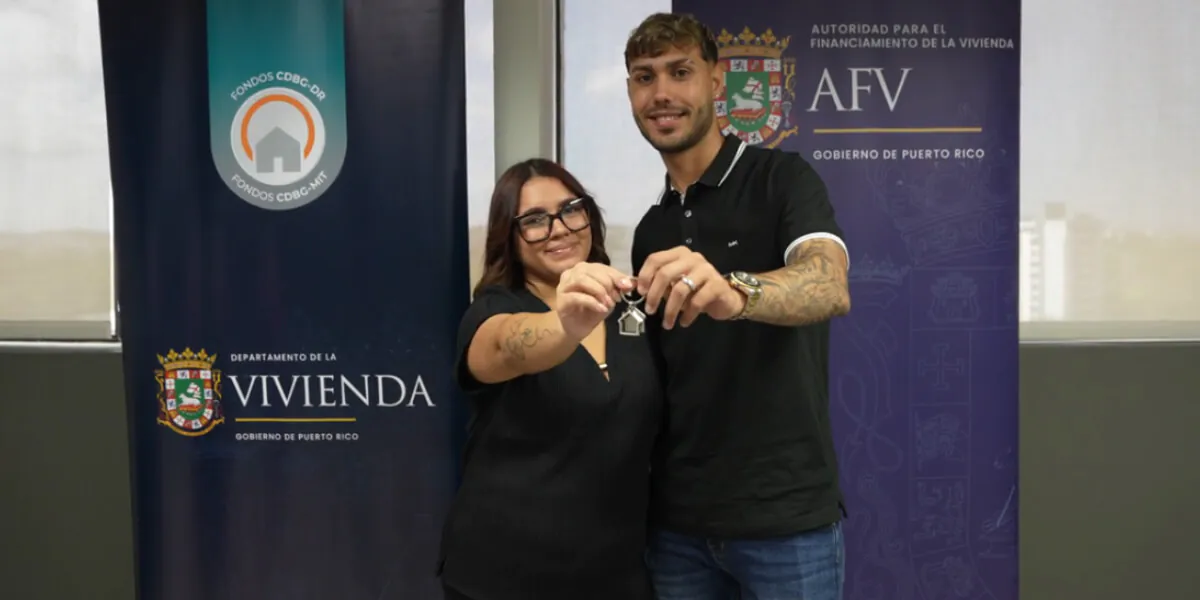
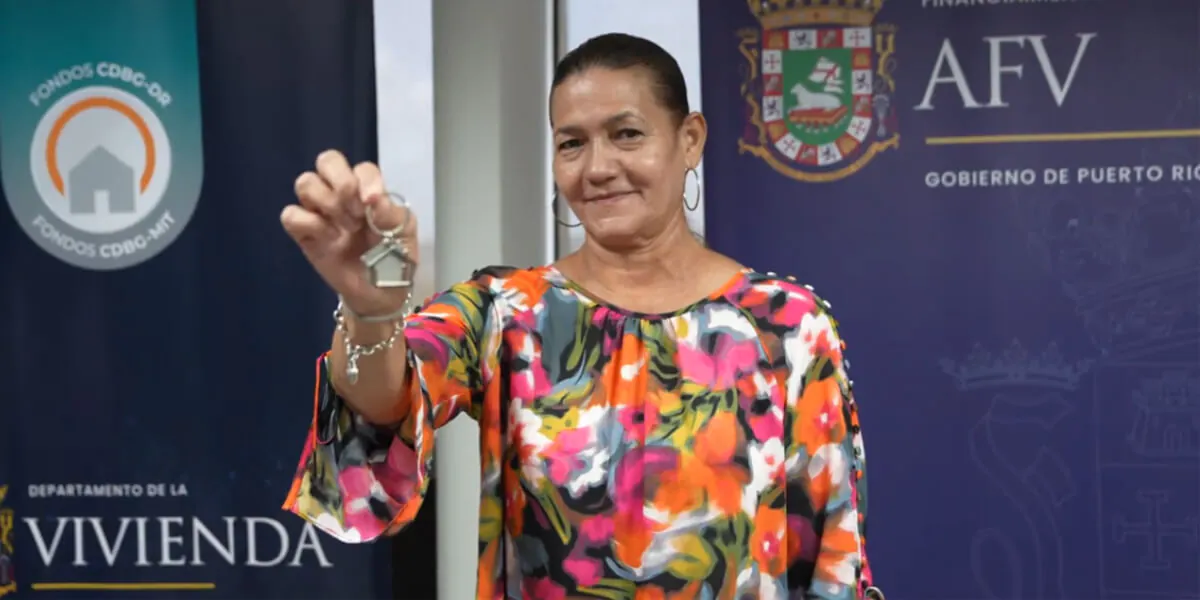


Allocation: $100,000,000
The program provides assistance to eligible homebuyers. By increasing opportunities for low- and moderate-income families and individuals, as well as those with urgent mitigation needs who do not own a primary residence, to purchase homes outside high-risk areas.
HOMEBUYER ASSISTANCE MITIGATION PROGRAM
Downpayment for your Home provides financial assistance to eligible families, helping low- to moderate-income populations, those in urgent need, and members of the Critical Recovery Workforce (CRW) to acquire safe housing.
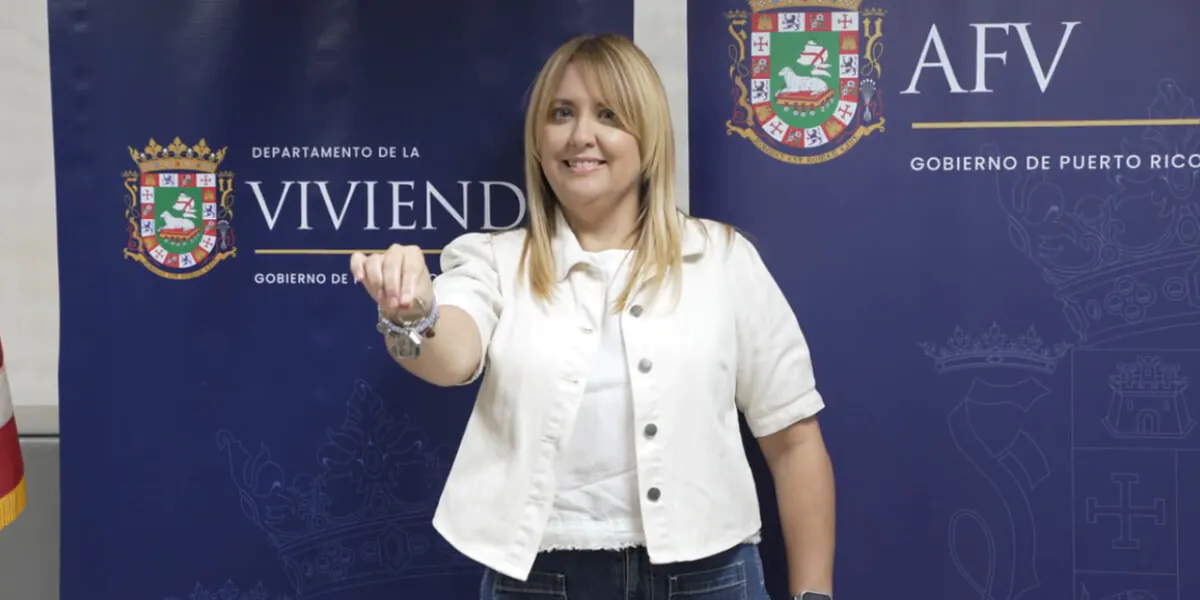
The Puerto Rico Housing Finance Authority (AFV) is the subrecipient responsible for administering this program under CDBG-MIT funds, which also seeks to strengthen family stability, disaster resilience, and community cohesion throughout the island.
Applicants may receive financial assistance in the form of a grant to be used for the purchase of a new or existing home: Up to a maximum of forty-five thousand dollars ($45,000) for each eligible household, up to a maximum of fifty-five thousand dollars ($55,000) for each eligible household with at least one member belonging to the Critical Recovery Workforce, both Low and Moderate Income (LMI) and Urgent Need (UN). Properties located in a designated Urban Center, certified by PRDOH, may receive an additional incentive of five thousand dollars ($5,000) to be used toward the purchase price.
*Applicants who accept the grant must commit to occupying the purchased home as their primary residence for a period of five (5) years.
More details in the Program Guidelines section.
GUIDELINES
PROGRAM REQUIREMENTS AND ELEGIBILITY
The applicant must meet the following requirements:
Adjusted 120 Percent Income Limits
- 1 Person $54,050
- 2 Persons $61,750
- 3 Persons $69,450
- 4 Persons $77,150
- 5 Persons $83,350
- 6 Persons $89,500
- 7 Persons $95,700
- 8 Persons $101,850
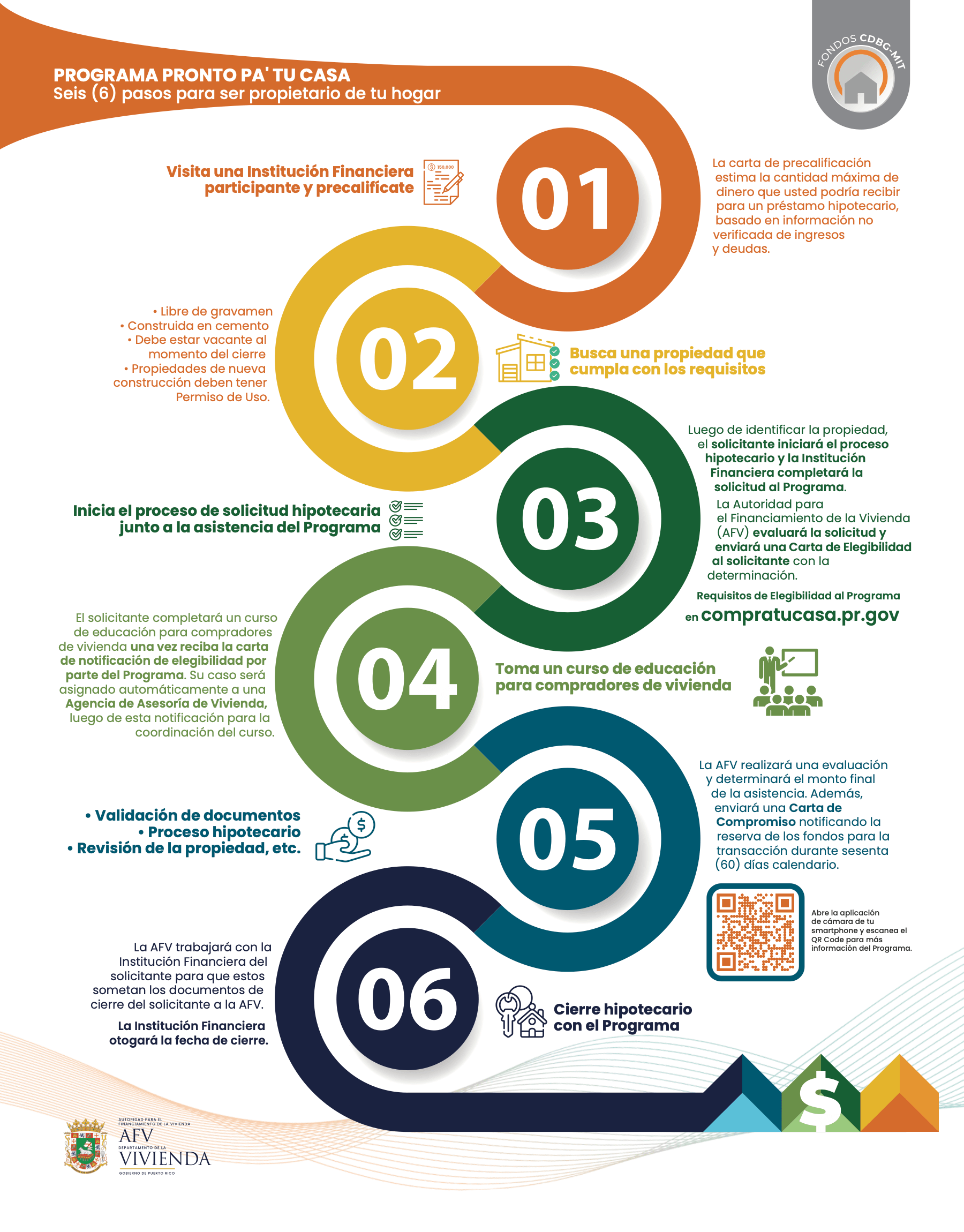
STEPS TO BECOME A HOMEBUYER
ASSISTANCE
The Program utilizes CDBG-MIT funds to provide direct assistance to homebuyers to facilitate and expand homeownership by using such assistance to:
- Subsidize interest rates and mortgage principal amounts for both LMI and UN homebuyers. The subsidy will be applied toward the purchase price:
- Pay up to 100 percent (100%) of the down payment required by the mortgage for the purchase on behalf of the purchaser for both LMI and UN homebuyers
- Pay reasonable closing costs associated with the home purchase on behalf of the purchaser for LMI and UN homebuyers
The following are the maximum awards:
- Non-Critical Recovery Workforce – a maximum of forty-five thousand dollars ($45,000) per eligible household.
- Critical Recovery Workforce – a maximum of fifty-five thousand dollars ($55,000) per eligible household with CRW members.
In addition, the Program will provide an additional redevelopment incentive of five thousand dollars ($5,000.00) to eligible households who elect to purchase a home located in a designated urban center certified by the PRDOH. To see if the home you are interested in acquiring qualifies as an urban center please click here.
PROPERTY ELIGIBILITY
Only single-family concrete residential structures located in Puerto Rico will be eligible. Properties with wood, acrylic, or metal structures within the living area of the structure will not be eligible. For purposes of the Program, single-family homes may include residences within one- to two-unit structures. Single-family units may include, but are not limited to:

Duplexes

Manufactured Housing Units (MHU)

Standalone, freestanding concrete residential structures

Single-family units connected to another structure

Condominium units

Cooperative units
INELIGIBLE USE OF FUNDS
The following uses of funds or activities are not eligible for this Program. This list should not be considered exhaustive and may be subject to change.
- Past due property contributions.
- Property fees or charges that are the responsibility of the seller.
- Refinancing of properties.
- Purchase of properties inherited by the Applicant or any property of which the Applicant is a co-owner.
- Financing the purchase of second homes and investment properties.
- Purchase of bonds or shares.
CRITICAL RECOVERY WORKFORCE
The Program seeks to incentivize the public or private critical recovery workforce sectors authorized to and currently exercising their profession in Puerto Rico. These include, but are not limited to:









Law Enforcement:
Law enforcement officers employed by a federal, state or municipal law enforcement entity in Puerto Rico; and, in carrying out such employment, are sworn to uphold, and make arrests for violations of, federal, state, tribal, county, township, or municipal laws. Includes federal, state and municipal police officers; correctional officers under state or federal correctional departments, members of the Puerto Rico National Guard, and all branches of the U.S. Military Services.
Education:
Employees of a public or private educational institution in Puerto Rico, duly accredited, that provides direct services to students. This category includes pre-kindergarten through 12th grade teachers, university professors, librarians, counselors, social workers, and other related personnel who provide services within an educational environment in Puerto Rico.
Firefighters:
Employed as a firefighter by the Puerto Rico Fire Department (“Cuerpo de Bomberos de Puerto Rico”) that is properly trained and directly performs tasks aimed at guaranteeing the protection of citizens against fires, preventing and fighting fires, saving lives and determining the origin and cause of the fire. This definition includes firefighters who serve as inspectors.
Infrastructure:
Workers employed in addressing the needs of Puerto Rico’s critical infrastructure, such as maritime ports, airports, aqueducts and sewer, electricity, gas, telecommunications, roads, highway and transportation.
Atmospheric Surveillance:
Staff employed by a federal, state or local entity dedicated to monitoring atmospheric conditions.
Emergency Medical:
Personnel employed of a Puerto Rico emergency services unit (public or private accredited entity). Person authorized by the Puerto Rico Secretary of Health and who has received training in the phases of emergency medical technology, which includes, among others, communication, emergency patient care, maintenance of work equipment, techniques and procedures of the Emergency Room (ER), patient handling and transportation, knowledge of the procedures used in obstetrics and assistance in respiratory and cardiac emergencies.
Healthcare Professionals:
Employed medical professional duly admitted to practice in Puerto Rico (public or private accredited entity), in accordance with applicable laws and regulations; any of the professions in the field of health and medical care, such as, among others, doctors, surgeons, dentists, pharmacists, nurses and medical technologists, as authorized by the corresponding laws of Puerto Rico. Employed specialists in the area of social work, psychologists, psychiatrists, and counselors duly authorized to practice the profession who are dedicated to provide prevention, treatment and rehabilitation services in the area of mental health. This category includes, but is not limited to, professionals from the Mental Health and Addiction Services Administration (ASSMCA, by its Spanish acronym), and includes professionals from the private sector.
Supply Chain:
Employees engaged in the transportation and delivery of food, health equipment and products, and basic necessities.
Emergency Management:
Workers employed in the public or private management of emergency disasters in Puerto Rico and its posterior recovery work.
Veterinary / Animal Services:
Employed animal medical professional duly admitted to practice in Puerto Rico (public or private accredited entity), in accordance with applicable laws and regulations. Employees in registered organizations dedicated to services in benefit of animals, such as, among others, animal rescue.
FREQUENTLY QUESTIONS

Applicants will be required to provide complete and accurate information regarding their household composition, household income, and other eligibility criteria.
The Program seeks to incentivize the public or private critical recovery workforce sectors authorized to and currently exercising their profession in Puerto Rico. Critical Recovery Workforce (CRW) professions include, but are not limited to:
Law Enforcement:
Law enforcement officers employed by a federal, state or municipal law enforcement entity in Puerto Rico; and, in carrying out such employment, are sworn to uphold, and make arrests for violations of, federal, state, tribal, county, township, or municipal laws. Includes federal, state and municipal police officers; correctional officers under state or federal correctional departments, members of the Puerto Rico National Guard, and all branches of the U.S. Military Services.
Education:
Employees of a public or private educational institution in Puerto Rico, duly accredited, that provides direct services to students. This category includes pre-kindergarten through 12th grade teachers, university professors, librarians, counselors, social workers, and other related personnel who provide services within an educational environment in Puerto Rico.
Firefighters:
Employed as a firefighter by the Puerto Rico Fire Department (“Cuerpo de Bomberos de Puerto Rico”) that is properly trained and directly performs tasks aimed at guaranteeing the protection of citizens against fires, preventing and fighting fires, saving lives and determining the origin and cause of the fire. This definition includes firefighters who serve as inspectors.
Infrastructure:
Workers employed in addressing the needs of Puerto Rico’s critical infrastructure, such as maritime ports, airports, aqueducts and sewer, electricity, gas, telecommunications, roads, highway and transportation.
Atmospheric Surveillance:
Staff employed by a federal, state or local entity dedicated to monitoring atmospheric conditions.
Emergency Medical:
Personnel employed of a Puerto Rico emergency services unit (public or private accredited entity). Person authorized by the Puerto Rico Secretary of Health and who has received training in the phases of emergency medical technology, which includes, among others, communication, emergency patient care, maintenance of work equipment, techniques and procedures of the Emergency Room (ER), patient handling and transportation, knowledge of the procedures used in obstetrics and assistance in respiratory and cardiac emergencies.
Healthcare Professionals:
Employed medical professional duly admitted to practice in Puerto Rico (public or private accredited entity), in accordance with applicable laws and regulations; any of the professions in the field of health and medical care, such as, among others, doctors, surgeons, dentists, pharmacists, nurses and medical technologists, as authorized by the corresponding laws of Puerto Rico. Employed specialists in the area of social work, psychologists, psychiatrists, and counselors duly authorized to practice the profession who are dedicated to provide prevention, treatment and rehabilitation services in the area of mental health. This category includes, but is not limited to, professionals from the Mental Health and Addiction Services Administration (ASSMCA, by its Spanish acronym), and includes professionals from the private sector.
Supply Chain:
Employees engaged in the transportation and delivery of food, health equipment and products, and basic necessities.
Emergency Management:
Workers employed in the public or private management of emergency disasters in Puerto Rico and its posterior recovery work.
Veterinary / Animal Services:
Employed animal medical professional duly admitted to practice in Puerto Rico (public or private accredited entity), in accordance with applicable laws and regulations. Employees in registered organizations dedicated to services in benefit of animals, such as, among others, animal rescue.
The applicant will complete a homebuyer education course once they receive the eligibility notification letter from the Program. Their case will be automatically assigned to a Housing Counseling Agency after this notification for course coordination.
Interested individuals can apply to the Downpayment for your home Program through a participating institution of their choice (to see the list of participating institutions, click here)
Only single-family concrete residential structures located in Puerto Rico will be eligible for the Program. Properties with wood, acrylic, or metal structures within the living area of the structure will not be eligible for the Program. For purposes of the Program, single-family dwellings may include residences within one- to two-unit structures. Single-family units may include, but are not limited to:
- Duplexes
- Manufactured housing units (MHU)
- Standalone, freestanding concrete residential structures
- Single-family units connected to another structure
- Condominium units
- Cooperative units.
- Cooperative Unit.
For this Program, PRHFA will allow Applicants to purchase homes which require minor and nonstructural repairs, provided the criteria is fulfilled as per Program Guidelines.
Yes. While homebuyers may choose to purchase homes anywhere in Puerto Rico, Program participants are encouraged to purchase Real Estate Owned (REO) properties.
The Program will provide grants of up to:
- a maximum of $45,000 per eligible Low and Moderate-Income and Urgent Need households; and
- a maximum of $55,000 per eligible Low and Moderate-Income and Urgent Need households for households with Critical Recovery Workforce members.
Eligible homebuyers that have selected to purchase a property located in an Urban Centers, as certified by PRDOH, may receive an additional five thousand dollars ($5,000) to be used towards the purchase price.
The Program has defined the urban centers for each municipality in Puerto Rico. The maps will be published and made available at, click here.
No, it does not. However, any assistance determined to be duplicative must be deducted from the Program’s calculation of the applicant’s total need prior to awarding assistance.
The Robert T. Stafford Disaster Relief and Emergency Assistance Act (Stafford Act), as amended, 42 U.S.C. § 5121 et seq., prohibits any person, business concern, or other entity from receiving Federal funds for any part of such loss as to which they have received financial assistance under any other program, from private insurance, charitable assistance, or any other source.
For this Program, PRHFA will allow Applicants to purchase homes which require minor and nonstructural repairs, provided the following criteria is fulfilled as per Program Guidelines:
- Program funds will not be used towards repairs;
- Repairs and improvements are covered under the Applicant’s mortgage;
- The Program will only accept loan products that include minor and nonstructural repairs for properties; • The accepted loan products include, but are not limited to, the following:
- Fannie Mae HomeStyle
- FHA 203(K)
- FHA 203(b) with Repairs Escrow (only for HUD REO Properties)
- USDA Rural Development Repair Loan
- VA Rehab Loan
- TPO AFV
- The Program will only accept for HUD REO properties the portion of the loan allocated for repairs to be deposited in an escrow account or otherwise retained by the lender;
- The improvements are not classified as construction, structural alterations, cosmetic, or reconstructive;
- The Program does not allow a projected appraisal. Repairs are limited to those identified by the appraiser in the property’s Appraisal Report;
- The total rehabilitation cost must not exceed the thirty-five thousand dollars ($35,000) cap;
- The repairs must be performed within the period of time stipulated by loan products.
- For HUD REO Property Purchase a repair holdback will be accepted only if the repairs amount is financed as part of the loan.
No. The assistance will only be used towards a down payment on a new or existing home.
The living area must be built entirely out of concrete. In case the chosen property has a section made of wood or metal, it cannot be in a living area. These cases are evaluated by the Program on an individual basis.
No. Each applicant will need to search for a property that is qualified and ready to live through an independent search or with a real estate agent.
Yes. The applicant must notify the original selected participating institution of the interest of withdrawing the application from the Program. Once the Participating Institution carries out the withdrawal process, the applicant may search the List of Participating Institutions under the Program to select a new institution.
This list includes the group of lending institutions and non-governmental organizations (NGOs) that currently participate in the Homebuyer Assistance Program (HBA). However, more lending institutions and non-governmental organizations could gradually join the Program. The Puerto Rico Department of Housing (PRDOH) – in collaboration with the Puerto Rico Housing Finance Authority (PRHFA) – will regularly update the list. The institutions/organizations listed here do not have the PRDOH endorsement, nor their authorized representatives. If the participating institution of your choice is not on the list, you may evaluate applying to the Program through on the participating institutions.
Under the Homebuyer Assistance Program an affordability period exists, this the period of time the homebuyer is required to own and occupy the property as their primary residence which is tied to the amount of assistance provided. The borrower must occupy the property as the primary residence for five (5) years. This period begins on the closing date, when the Mortgage Deed and Restrictive Clauses are signed. If the terms and conditions of the second lien are violated, the PRHFA is entitled to recover all or part of the grant. The grant balance will be waived or reduced by twenty percent (20%) for each year of residency completed, no credit given for partial years completed.
MORE QUESTIONS ABOUT THE PROGRAM?
PUERTO RICO HOUSING FINANCE AUTHORITY
URB. ALTAMIRA 638 ALDEBARÁN STREET
SAN JUAN, PUERTO RICO
TEL. 939-333-5417 | INFO-PRONTOPATUCASA@AFV.PR.GOV
CALL CENTER
1-833-234-2324
TTY 787-522-5950
POSTAL ADDRESS
HOMEBUYER ASSISTANCE PROGRAM
PO BOX 71361
SAN JUAN, PR 00936-8461